
koala
One Animal at a Time
_edited.png)


Why koalas?
A tree-dwelling marsupial related to kangaroos, the koala has fluffy ears, a round head, and an adorable, sleepy appearance, but faces an endangered future.
The distribution of these unique animals extends exclusively to eastern and south-eastern Australia, in the states of Queensland, New South Wales, Victoria and South Australia. They inhabit temperate, subtropical, tropical, wooded, and semi-arid forests where their favorite species of eucalyptus and refuge trees abound.
Now we must act to protect them.
Read about koalas and their ecosystems
_edited.png)
Giving a voice
We echo nature and koalas in their cry for survival in the face of climate change, wildfires and deforestation.

Forest and Climate
The importance of Australia's forests is essential for iconic and endangered species like koalas.
An estimated 6,382 koalas died in New South Wales in the 2019/20 bushfire season. We raise awareness about the forest fires that are destroying their natural habitat and their relationship with the climate emergency, emphasizing the ways in which we can help to prevent and act.
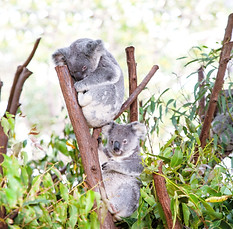
Koala Line
Koalas are very important to the Australian ecosystem and environment.
Their excrement deposits feed the forest floor, helping forests to grow and regenerate and increasing biodiversity. They are also a food source for small mammals and insects. Its highly insulating fur is used by birds to make their nests. We share all the steps to take to protect koalas near their habitat.
.jpg)
Eucalyptus
Koalas may be wiped out in three decades by felling trees in New South Wales, eastern Australia, where fewer than 20,000 koalas remain. 90% of its hydration comes from the leaves of a tree: the eucalyptus. The loss of these forests poses a great challenge for koalas and more than 247 native species. The felling of trees is responsible for a 53% and 26% reduction in the koala population here and in Queensland. We raise awareness about the importance of eucalyptus for the survival of koalas.